Friday, April 06, 2018
Reservation Policy Is Here to Stay : Amit Shah
Friday, March 02, 2018
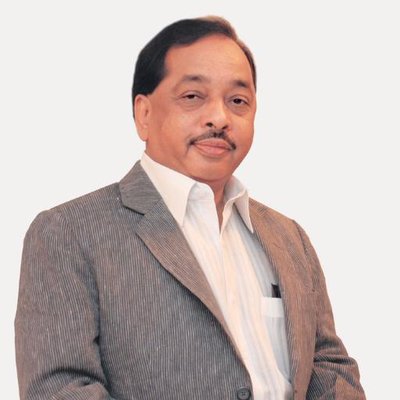
Narayan Rane : A Longtime Sulking Leader
Monday, February 12, 2018
Metro project of Pune Much Faster Than Expected - Mahamatro CEO
Wednesday, January 31, 2018
Martyr's family to get 25 lakh henceforth : CM Fadnavis
Friday, January 26, 2018
Opposition Tries to Hold Together
Will Shiv Sena Benifit from Separation? Hardly!
Even
though Shiv Sena has announced that it would fight the coming
Assembly and Lok Sabha elections on its own, the challenge is not an
easy one for the party. Shiv Sena has a herculean task ahead of it to
attract middle-class and urban voters in the state who have turned to
Bharatiya Janata Party lately. The party has set for itself an
ambitious goal of winning 25 seats (out of a total 48) in Lok Sabha
and 150 seats (out of a total 288) in the Assembly elections that are
widely expected to happen before the schedule.
Thursday, January 25, 2018
Shiv Sena Is a Tiger Turned Tortoise - Ajit Pawar
With his days in opposition, Nationalist Congress Party leader and former Deputy Chief Minister Ajit Pawar is making most of this opportunity. Speaking in Jalana in Marathwada region, he took potshots on Shiv Sena, a party that is sharing power with Bharatiya Janata Party with an extreme awkwardness. Putting his finger at Shiv Sena where it hurts most, Pawar said that Shiv Sena was a tiger during Balasaheb Thackeray’s days but has been since been reduced to be a tortise.
Shiv Sena has not become even a sheep or a hare, but tortoise that thrusts its neck and doing nothing, the leader said. A march was organized at Jafarabad in Jalana district as part of NCP’s campaign Halla Bol, that seeks to attack the ruling BJP for its alleged failures on all fronts, under the leadership of Pawar Jr. The statement came during the meeting after the march.
Targetting Shiv Sena for its precarious situation, Ajit Pawar said that the party threatened a hundred times during three years to leave the ruling alliance, but it couldn't resist the lure of power that has come to its way after full 15 years!
Tuesday, January 09, 2018
Second National Teachers Congress to be held in Pune
After attaining stupendous success in its first National Teacher’s Congress (NTC) in 2016, the MIT School of Government is all bolstered to launch its second edition to be held between January 10 to 12, 2018 at the Prof Dr Vishwanath Karad MIT WPU Campus at Kothrud in Pune.
The 2nd NTC is organized under the aegis of Dr Vishwanath Karad MIT WPU and MIT School Of Government, Pune with the active support of the Government of Maharashtra. Several institutions of importance like the All India Council for Technical Education (AICTE), Association of Indian Universities (AIU) and UNESCO Chair for Democracy, Peace, Human rights and Tolerance, Pune have also rendered their support and association in this thoughtful mission.
Speaking about the second edition of the NTC, Shri Rahul Karad, Founder and Convenor, said, “We at MIT WPU are elated to announce the 2nd edition of National Teachers Congress to be held at our MIT WPU campus tomorrow. It is a matter of pride for me to say that the teaching community in our country has found the NTC to be a ‘must attend’ event and have been looking forward to it. Over 8000 higher education teachers from across the country including 500 from abroad have confirmed their participation.”
Shri Devendra Fadnavis, Chief Minister of Maharashtra would be the Chief Guest even as H H Dalai Lama, Nobel Peace Laurete & Leader of Tibetan Buddhism and Shri Vinod Tawde, Minister of Higher & Technical Education, Govt of Maharashtra would be inaugurating the 2nd National Teachers Congress on January 10, 2018 at 10 am.
The theme for the inaugural session is “Higher Education of India, Prospects & Retrospects.” The Day 1 will also see special felicitations in which noted educationists would be conferred the Jeevan Gaurav Puraskar for facilitating the creation of generations of enlightened and knowledge driven students and the beneficiaries are
1. Padma Shri Prof Kasturi Lal Gupta, Founder Coordinator & Advisor Thin Film Laboratory, Indian Institute of Technology.
2. Dr Arun Nigavekar, Senior Advisor, Trustee, Science & Technology Park, University of Pune & Ex Chairman of UGC.
3. Prof S C Sahasrabuddhe, Former Deputy Director, IIT Bombay and Former Director, Dhirubhai Ambani Institute of Communication Technology, Gujarat.
4. Padma Shri Dr Sanjay G. Dhande, Eminent Educationist & Former Director, Indian Institute of Technology (IIT) Kanpur.
Eminent speakers at the function include Prof Dr Vishwanath D. Karad, Founder President, MIT World Peace University and Founder Executive President, MAEER’s MIT Group of Institutions, Smt Mukta Tilak, Mayor of Pune city, Dr Anil D. Sahasrabuddhe, Chairman, All India Council for Technical Education (AICTE), Dr Anil Kakodkar, Padma Vibhushan & Eminent Scientist (Atomic Energy) and Dr Lobsang Sangay, President, Central Tibetan Administration, Tibet.
Wednesday, January 03, 2018
In Every Bandh, Public Property Bears Brunt
As the day comes to en end, a shut-down across Maharashtra called by Dalit leaders to protest the violence during the bicentennial celebration of the Bhima-Koregaon battle, the public property became main target of the miscreants. City and outstatation buses were again damaged in Mumbai and Pune.
In Mumbai, 47 buses of the civic transport service 'BEST' were damaged by protesters in Kalanagar area (Bandra), Dharavi, Kamraj Nagar, Santosh Nagar, Dindoshi and Hanuman Nagar, an official from the Disaster Management Unit of the Brihanmumbai Municipal Corporation (BMC) told. In Pune, the number was as high as 55 where Pune Mahanagar Parivahan Mahamandal Limited (PMPML) buses were damaged, informed PMPML chief Tukaram Munde.
Both the cities witnessed a major disruption of road traffic owing to protests. Offices too witnessed low attendance, as employees stayed away from work fearing violence.
Though the state government did not declare a school holiday, many parents chose not to send children to school. District Collectors at many places declared holiday in their jurisdiction.
Tuesday, January 02, 2018
Second edition of National Teachers Congress to be held in Pune from Jan 10 to 12, 2018
After attaining stupendous success in its first National Teacher’s Congress (NTC) in 2016, the MIT School of Government is all bolstered to launch its second edition to be held between January 10 to 12, 2018 at the Prof Dr Vishwanath Karad MIT World Peace University (MIT WPU) campus, Kothrud, Pune. The congress would be inaugurated by the auspicious hands of His Holiness Dalai Lama.
As per information given by Prof.Dr. Vishwanath D. Karad, Founder President, MIT World Peace University, Pune and Prof. Rahul V. Karad, Chief Convener, National Teachers’ Congress & Exevutive President, MIT World Peace University, the 2nd NTC will be organized under the aegis of Dr Vishwanath Karad MIT WPU and MIT School Of Government, with the active support of the Government of Maharashtra. Several institutions of importance like the All India Council for Technical Education (AICTE), Association of Indian Universities (AIU), Maharashtra State Principal's Federation, Bharatiya Chhatra Sansad (BCS) Foundation and UNESCO Chair for Democracy, Peace, Human rights and Tolerance, Pune have also rendered their support and association in this thoughtful mission.
There would be six different sessions held in the congress on the topics of Globalization of Indian Higher Education – Drawing the Roadmap, Value - Based Universal Education : Foundation for World Peace, Quality in Higher Education : Truth and Reconciliation, Use of Technology in Education : Impact Vs Impediment, Educating the Educators and Economics of Education.
Speaking about the second edition of the NTC, Mr. Rahul Karad, Founder and Convener, said, “We at MIT WPU are elated to announce the 2nd edition of National Teachers Congress to be held at our MIT WPU campus in Pune in the month of January 2018. It is a matter of pride for me to say that the teaching community in our country has found the NTC to be a ‘must attend’ event and have been looking forward to it. Over 5000 higher education teachers from across the country have confirmed their participation.”
He added, “We are expecting participation of about 1000 University teachers of Indian origin living outside India. A number of thought leaders, policy makers, academic leaders, business leaders and spiritual leaders will interact with the teachers over a period of three days. The inauguration will be done by “His Holiness Dalai Lama”.
The 1st NTC was a large gathering of 3 days having all-round and Spirited Teaching fraternity of India, congregated Teachers of Higher education from all states of India at a single venue to discuss, deliberate and find solutions on issues of education and allied sectors.
Around 5000 spirited, socially sensitive and active College Teachers participated at the program to understand various national issues, the challenges faced and solutions to those challenges in order to imbibe various inputs among students and educate the society to create a knowledge driven holistic nation.
Friday, September 15, 2017
A Gold Medal Around Your Neck Doesn’t Matter, Giving 100% In The Field Does
Sunday, July 16, 2017
Rain Gods Pleased; Maharashtra to Get More Rainfall
Rain gods seem pleased with Maharashtra as the meteorology department has predicted more rains in the region.
Many regions of Maharashtra witnessed heavy rainfall and it is assumed that the state will be receiving heavy to more heavy rain. Nashik recorded more active rainfall and now it is now its way to cover entire Maharashtra.
According to ndia Meteorological Department (IMD), Southwest Monsoon has returned to its active phase. Since Thursday, the northern regions of Maharashtra and Konkan reported heavy to very heavy rains. At the same time, Pune city recorded 26 mm rainfall, the heaviest spell recorded so far in July.
The trend is expected to continue over the weekend, particularly over Nandurbar, Nashik, Jalgaon and Dhule districts, IMD said.
Till July 12, it was remarked that these northern districts fell under the ‘rainfall-deficient’ categories, with a shortage of 30%-50% below normal. But after receiving the heavy rains for only two days, these figures have not only shown marked improvements, but they are touching normal levels.
The sudden spike in rainfall activity over the state to the influence of a low-pressure system lying over west Madhya Pradesh was recognised by the IMD, Pune officials.
Senior Scientist at the climate monitoring analysis group Sunitha Devi stated, “This system, which is expected to move towards Gujarat, is set to further intensify into a deep depression, bringing more and heavier spells of rain over Madhya Maharashtra and Konkan, especially during the weekend”.
On Friday, some places in Raigad and Sindhudurg districts in Konkan recorded very heavy rains; Pen (240 mm) and Bhira (178 mm) were among the wettest towns. IMD authorities noted, “the monsoon trough has now shifted southwards and is passing through central India, so the rainfall is expected to get heavier in the coming days”.
Sunitha Devi informed, “The rainfall will be fairly well-distributed over the state, as extended range predictions indicate that the rest of July will be wet. There are fresh systems that will cause rains over central and western parts of the country”.
Meanwhile, in the Marathwada and Vidarbha regions, the rain is expected to gather momentum only by June 20. From the time when the monsoon season started, Vidarbha has been experiencing deficient rainfall.
Saturday, July 15, 2017
Monsoon covers entire Maha, brings relief to farmers
The central part of Maharashtra is a major food grains growing area and rainfall in this region has brought relief to farmers as well as the state administration.
"For the first time in July, the south west monsoon has brought rains to all parts of the state. There had been showers since July 1, but of low intensity and scattered. It is good that the entire Maharashtra is now covered," an official of the India rpt India Meteorological Department told PTI.
"The central parts of the state - comprising north Maharashtra and Marathwada - received showers of medium intensity. It will be helpful for farmers as the state was facing a potential challenge of second round of sowing in the region," he said.
"The second round of sowing means an additional input cost to the already debt-ridden farmers," the official said.
Maharashtra agriculture minister Pandurang Fundkar told PTI that sowing on over 66 per cent of the total area has been done during the ongoing Kharif season.
The state administration was a bit worried over the delay in rainfall. Chief Minister Devendra Fadnavis had even issued an advisory for postponing the sowing, he said.
"As of today, the sowing has taken place on more than 66 per cent of agricultural area in the state. We are a bit relieved now," Fundkar said.
A report from Nashik said incessant rains lashed the city and other parts of the district after a dry spell, leading to water logging in low-lying areas.
The water level of Godavari river has risen following heavy downpour since last night in the catchment areas, an official said.
The irrigation department has not released water from the Nashik's Gangapur dam owing to the heavy rains.
Friday, March 24, 2017
Ravindra Gaikwad Brings Embarrassment for Shiv Sena Besides Himself
Saturday, February 11, 2017
Fadnavis Ups the Ante; BJP-SS Tussle Becomes Fierce
Tuesday, December 13, 2016
Uddhav Thackeray - The Man Who Perfected the Art of Sulking
Monday, November 16, 2015
Who rule Maharashtra - Babus or Ministers?
Tuesday, November 03, 2015
Allies Keep Their Honor Intact
It was no less than a clash of titans and the whole of Maharashtra, at least the Maharashtra that takes interest in politics, was looking at it anxiously. The Kalyan Dombiwali Municipal Corporation's election promised a close, almost bloody fight and it turned out to be so. However, in the end, both the two parties could claim final victory but managed to keep their honor intact.
Even though Shiv Sena and Bharatiya Janata Party share the power in the state and the center, neither of the parties shares cordial relations. Not that they had sweet memories of their co-habitation for the last 25 years, but their relations have touched ridiculously low during last one year. Ever since severing ties in last October, none of the saffron party has made any sincere attempt of reconciliation. Even after seating side by side in the state cabinet, they have not really accepted each other. Therefore, when these two allies faced each other in KDMC election, all eyes were set on what ensured to be the fireworks.
The campaigning for the election lived up to that promise. Both Shiv Sena executive president Uddhav Thackeray and Chief Minister Devendra Fadnavis left no stone unturned and indulged in freestyle wrestling with their verbal attacks. Cases of attacks, on the workers from and by both parties, were reported and registered. Even bullets were fired before ballots and the politics in this neighboring city of Mumbai turned bloody.
In the final phase of the campaigning, the fight became even murkier as Thackeray and Fadnavis dropped all pretentions and indulged in mud slinging. The verbal duel led to some uncharacteristic remarks as well by Fadnavis.
However, as results rolled out from the electronic voting machines on Monday, Shiv Sena seemed to edge past winning post during the early rounds and BJP managing to post honorable tally. However, the dance of democracy could be seen in full vigor by late afternoon, as Shiv Sena remained 10 seats away from the majority and BJP almost running neck to neck to it. It is clear that Shiv Sena will be able to muster majority, with the help from Maharashtra Navnirman Sena and independents, while BJP can boast of increased strength - its tally having gone up to 42 from the 9.
Neither Shiv Sena lost its hold on the backyard of Mumbai, its strong bastion literally, nor BJP was wiped out before the former's blitzkrieg. All other parties, including Congress, Nationalist Congress Party, MNS and others just drifted away in the barrage of these two parties; and meanwhile, Majlis-E-Ittehad-ul-Musalmin got away with two seats in its first ever test of strength. That was the real danger bell for the self-proclaimed 'secular' parties!
Thursday, September 24, 2015
CM Fadnavis Shows His Distinctness
Devendra Fadnavis, the Chief Minister of Maharashtra, has showed his distinctness with his measured yet aggressive response to an open letter written by journalist Rajdeep Sardesai. This was not a unique action as many politicians of yore had taken to writing articles in the newspapers to articulate their position. Former Prime Minister Atal Bihari Vajpayee even penned long muse when he was mired in political controversies and problems. However, what makes Fadnavis stand out is that he has taken to the medium often used against him for last one year and while defending his own position, he has put forward the work he was doing. This would serve not only in taming the hostility of the media towards him, in particular, and his government, in general, but also soothing his political ally Shiv Sena which is in the government bashing mode ever since it decided to share power.
Sardesai, often seen as an adversary of the Hinduist ideology which Fadnavis adheres to, had targeted Fadnavis of failing on many counts and letting down those who had hopes in him. "I was one of those who expected a lot from this leader who come to power with his youth and vision," Sardesai wrote. He had taken up mainly three points which underlined, in his eyes, the hopelessness of the present government. These points were - ban in certain municipal corporation limits on sale of the meat to be enforced for eight days during the Paryushan Parva of Jain community; transfer of Rakesh Maria, the Commissioner of Police, Mumbai during the course of investigation in high-profile Sheena Bora murder case, ostensibly to curtail the probe and third was a recent circular issued by the government which allegedly allowed the police to frame sedition charges against anyone who would criticize the public representatives. The letter was published in English, Hindi and Marathi publications as well and received due attention.
This ruffled quite few feathers in Bharatiya Janata Party and it was felt that this attack must be countered. But no one expected that CM himself would lead from the front and give a befitting reply to a journo with a stature such as Sardesai has.
That the CM replying to an open letter was itself a novelty. But Fadnavis added another dimension to it by twisting the reply and coloring it in an Urban-Agrarian conflict. His terse sentence that 'I am more concerned with providing food to the drought-hit farmers than filling your plate with non-veg' is a classic example of how a politician, even when well wishing and sincere, can turn any debate in his or her own stride. The BJP has outfoxed Congress with great cunningness in recent times because of this type of willy politicians. In fact, Congress is now almost bereft of clever leader who could mould the discourse any way they like.
The Twitter was abuzz with the development and the hashtag #DevendraSlapsRajdeep remained among top trends for two days. Various groups on WhatsApp were replete with the text of the letter. It took 24 hours for Sardesai to reply to CM's letter but in his immediate reaction, he just tweeted -
Whatever the outcome of the debate, one thing is sure - that this BJP government is a different pot to handle for the critics and it is going to break more norms in the future.
Sunday, September 06, 2015
People are enjoying religion as never before
Twice within last ten days, I travelled to Nashik, that old city in North Maharashtra which, it is said, Lord Ram, Seeta and Lakshman visited while in their exile to forest. The city reverberates with the same ancient spirit of holiness and faith. And this time, the spirit is especially evident as millions of devotees throng to the banks of river Godavari to have a dip in its specially-made clean stream during the auspicious period of Sinhastha.
Kumbh Mela, the grandest of all festivals is currently on in the city. Kumbh is the 12-yearly gathering of almost all important saints and holy men in Hindu faith. But my trips to Nashik were not connected in any way to it and I was not there at the shahi snaan, the extravagant holy bath done by sadhus and devotees. However, once after putting my feet on this land of pious worshippers, I couldn't keep myself off from the enchanting glimpses offered at the ghats.
The main ghat of the Panchvati area glittered with all kinds of lightings. Men, women and children, in all kinds of attires and with varying ages, filled themselves and their kin with happiness of having attained one of the most relieving satisfaction ordained by the culture. Innumerable ascetics, with almost everyone in his unique dressing and hairstyle, walked past the frenzied crowds with ease, with barely any concern or disdain for the scene around them. They were just a fraction of the sadhus camping around this city and tens, if not hundred, times more than them station in specially created colony.
The pantheon of godmen keeps enlarging, not only in Hindu but probably every religion of the world. It may not particularly point towards the increasing piety of the faith but it doesn't show any diminishing of its hold either. True, people are not bound by the religious dogmas the way they used to be, say, a hundred years ago. But they are not letting it go out of their conscience either.
Speaking more accurately, the people are enjoying the religion as they never did in the past. This holds true especially in case of Hindu faith where all leashes are open in an already disorganized fold and everyone is free to follow his own path.
For centuries, Hindus were infected with caste system with its strict hierarchical demarcations and very few individuals, if any, took joy in adhering to his or her rituals. This was true for the castes at lower rung of social ladder and even more for the so called upper castes. The members of some of the outcast castes were not even allowed to walk side by side with those ruling them.
After independence in 1947 and introduction of the Constitution of India, these socially deprived people attained the freedom and equality, howsoever compromised they might be at times. However, the members of these communities were still languishing in economic deprivation as centuries of slavery and exploitation left them in penury. They struggled for existence while ruling castes jostled with each other to capture modern means of progress.
Add to this that elusive emancipation of women which was on debating table for two centuries. That is realized, again, in a limited manner. But whatever is realized is enough to bring about a new uprising in the hitherto repressed expressions of emotions. Female were no longer weaker sex. All shackles binding them were free.
All this changed in 1991-92 when India, having forced by the abject restrictions, mended its path - from Nahruvian economy of deprivation to liberal economy of post-Cold War era. Coupled with reservation in jobs and education, the backward classes came closer to their former masters while forward castes, due to their advantageous position, accumulated fortunes in greater proportion where once even shadows of their forefathers was forbidden.
These developments manifested in the form of frolicking women in Ram Ghat at Panchwati in Nashik where Lakshman said to have marked a line for Seeta warning her not to cross it. They came to fore in the form of groups of villagers, clearly showing their rural origins and caste markings, freely offering aartis to the river Godavari.
These all are signs that gone are the days when religion used to be a force to be feared of, an all pervasive power which curtailed individual’s freedom. Now, individual is bending his faith at his comfort and relishing the offerings as just another recipe to be savored.
In Nashik, the traders and businessmen complained that their business was hit by low numbers of devotees who did not turn up on the auspicious day because of heavy deployment of security personnel. The merit of this complaint is another thing. But the very fact that these businessmen looked at this event as an opportunity to make money because of large number of devotees itself proved that this was not just a spiritual and sacred occasion, but a chance of wealth creation and this because devotees were prepared to shed their money for earthly pleasures.
The self-professed progressives pride themselves in deriding the religion and rituals. They don’t feel any need to separate grain and chaff. Last month, in a program organized by weekly Sadhana, veteran journalist warned the intellectuals of the pitfall. “You are right in denouncing religious dogmas and taboos. But I tell you, please look at the religion seriously,” he said. If the ongoing Kumbh has any message to give, it is this.